If you’ve had a bone density scan that came back lower than you’d like, or your doctor mentioned the word osteopenia and you went home and worried about it for a week, you’re not alone. Bone loss speeds up after 40, and faster still after menopause, and it’s one of those things that feels invisible until it isn’t. The good news is that dumbbells, the same ones you might already be using for general strength, are one of the most useful tools you have for slowing that loss down.
This article is about choosing the right moves and loading your bones enough that they respond. Not every strength exercise does that equally well, so let’s get specific.
Why dumbbells can help protect your bones after 40
Bone is living tissue. It rebuilds itself constantly, and it responds to the forces placed on it the same way a muscle responds to a workout. When you load a bone with enough resistance, it signals your body to lay down new bone tissue rather than let old tissue break down un-replaced. Without that loading signal, bone loss simply continues on its own schedule.
Dumbbells are useful here because they let you apply real, direct resistance to the exact bones that tend to lose density fastest after 40: the hips, the spine, and the wrists. You can start light, add weight gradually, and do it all at home without equipment that takes up a room.
This is different from the cardio-and-stretching routine many women settle into. Walking and yoga matter for other reasons, but neither applies enough mechanical load to meaningfully signal bone-building on its own. Resistance training with dumbbells fills that gap.
What makes an exercise actually build bone, not just muscle
Not all strength exercises carry the same bone benefit. A bicep curl works the muscle but barely touches the bone, because the load path doesn’t run through a weight-bearing joint. The moves that matter most for bone density share a few features:
- They load a major joint along its weight-bearing axis, like the hip or spine in a squat.
- They use enough resistance to challenge the muscle close to fatigue, not just a light warm-up weight.
- They involve a somewhat jarring or weight-bearing position rather than a fully supported, lying-down position.
This is why a standing squat does more for your hip bones than a seated leg extension, and why a standing overhead press does more for your spine than a machine that holds your back still. The moves below were chosen with that principle in mind.
The best dumbbell moves for hip and spine bone density
The hips and spine are the two sites where fracture risk matters most as women age, so these moves deserve the bulk of your attention.
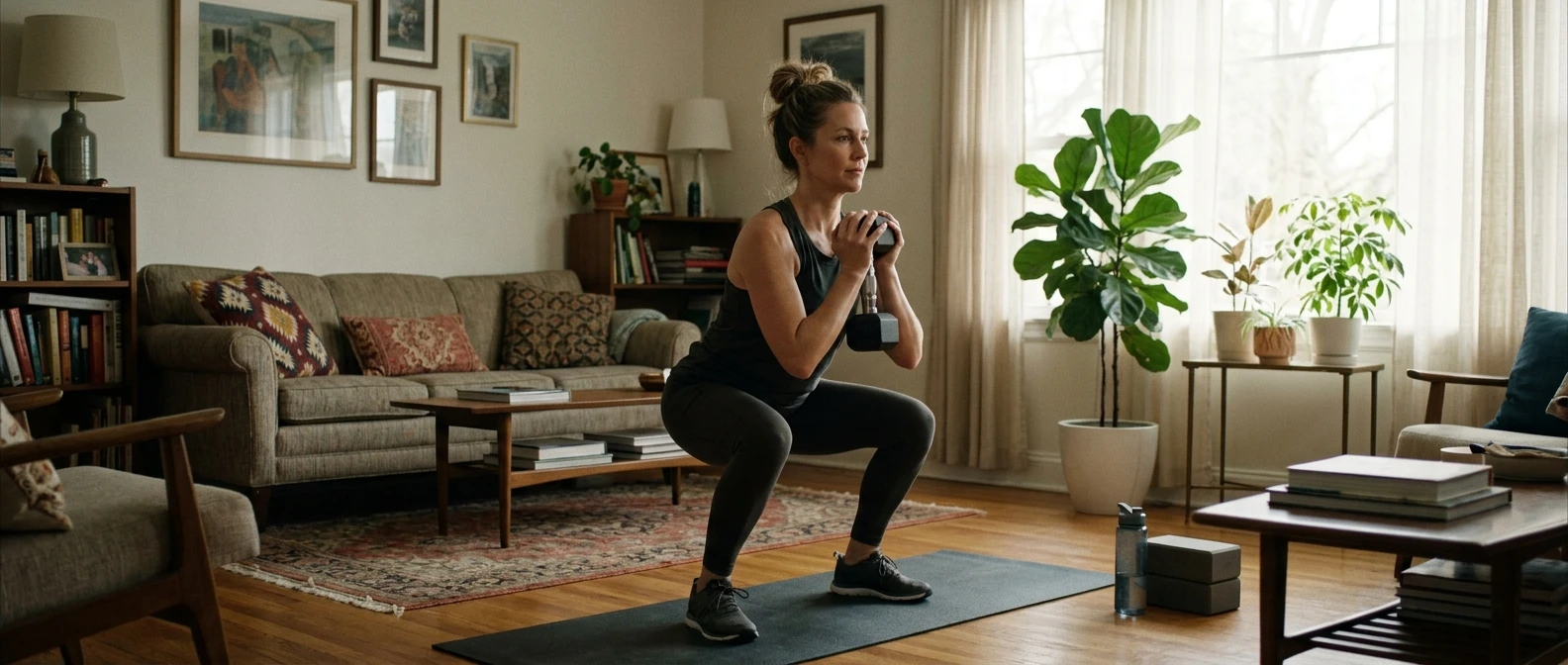
Goblet squats. Hold a dumbbell vertically against your chest with both hands and squat down, keeping your chest up and your weight through your heels. This loads the hip joint directly and also asks your spine to stay upright under load, which is exactly the kind of signal bone responds to.
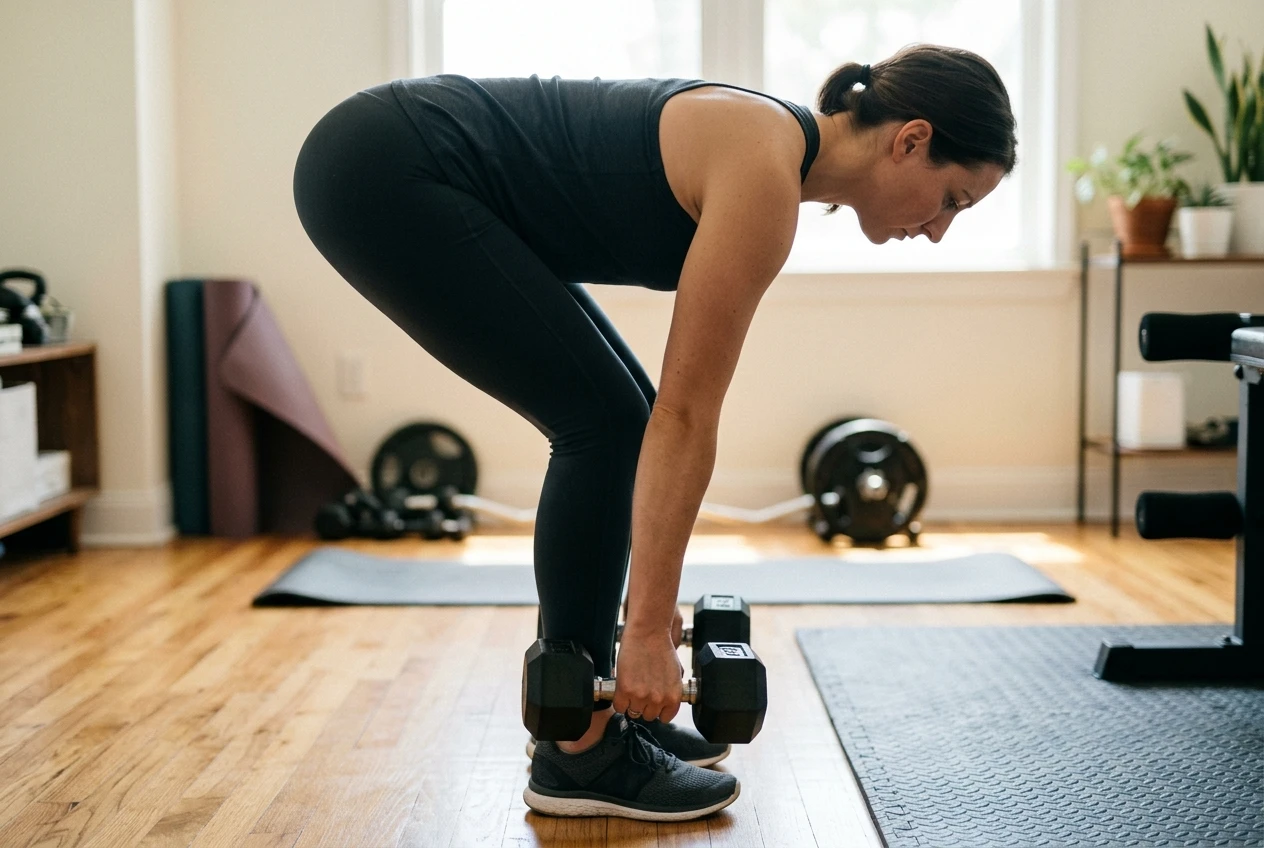
Romanian deadlifts. Holding a dumbbell in each hand, hinge forward from your hips with a slight bend in your knees, lowering the weights along the front of your legs, then stand back up by driving your hips forward. This move loads the hip and the lower spine together and is one of the most direct ways to challenge bone at both sites in a single exercise.
Weighted step-ups. Step onto a sturdy bench or stair holding a dumbbell in each hand, driving through the lifted leg. Step-ups put your full body weight plus the dumbbell load through one hip at a time, which more closely mimics the kind of single-leg loading that keeps hip bone dense.
Standing overhead press. Press a dumbbell in each hand from shoulder height straight overhead while standing. Because you’re standing rather than seated, the force travels down through your spine, which is why this version matters more for bone than a seated press does.
If you’re newer to these movement patterns, it’s worth building a base of comfort with squatting and hinging before loading them heavily. The how to start strength training after 40 guide walks through that foundation if you haven’t covered it yet.
The best dumbbell moves for wrist and arm bone strength
Wrist fractures from falls are common after 40, and the forearm bones respond well to direct loading too.
Wrist curls and reverse wrist curls. Resting your forearm on your thigh or a bench, hold a light dumbbell and curl your wrist up, then let it lower slowly. Reverse wrist curls train the opposite motion. These isolate the forearm bones directly, which few other exercises do.
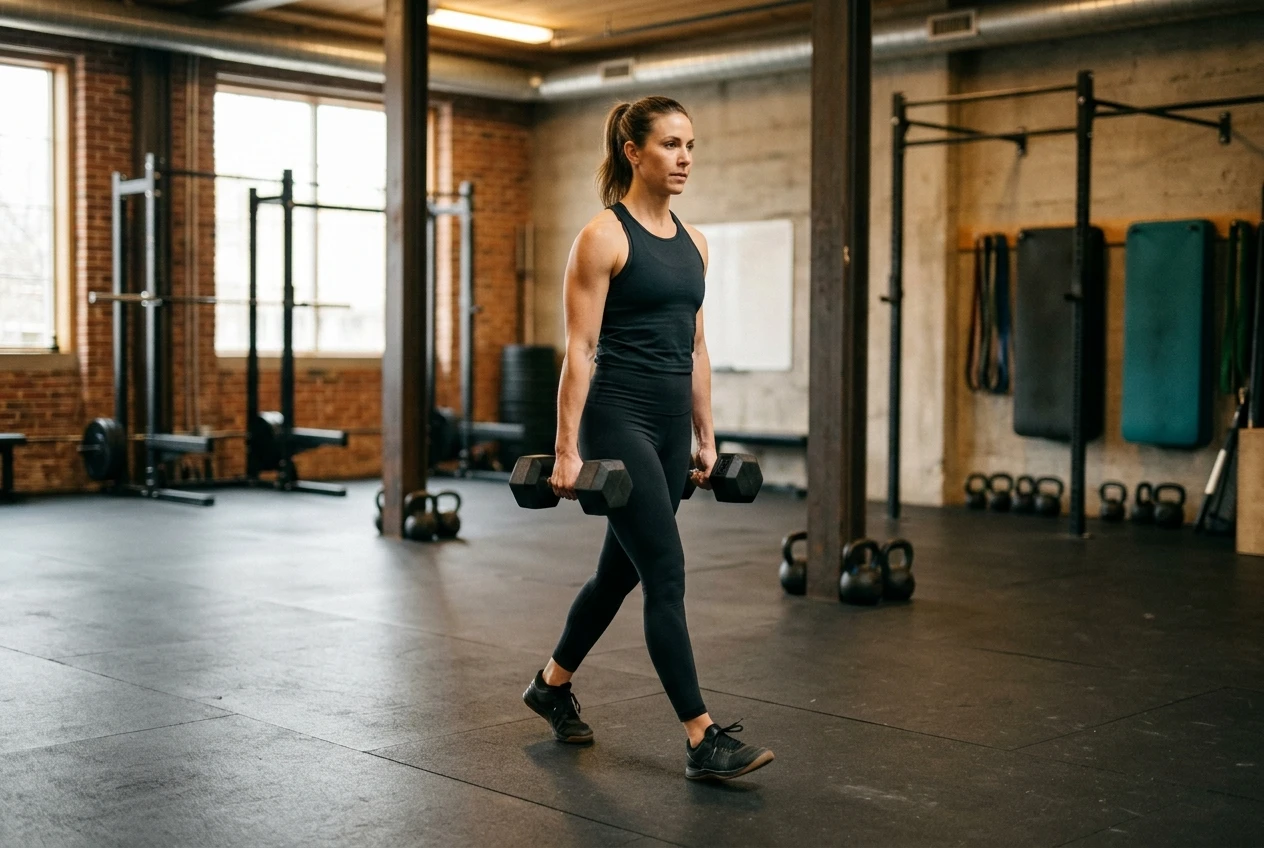
Farmer’s carries. Hold a dumbbell in each hand at your sides and walk for a set distance or time, keeping your shoulders back and grip firm. The sustained grip demand loads the wrist and forearm continuously, and the carry also works your spine and hips at the same time, making this one of the most efficient moves on this list.
Bent-over rows. Holding a dumbbell in each hand, hinge forward and pull the weights up toward your ribs. The gripping and pulling action loads the wrist and forearm while also working the upper spine.
How much weight to choose, and when to progress it
Bone responds to load that’s genuinely challenging, not to a weight you can lift forty times without effort. A reasonable starting point is a weight where the last two or three repetitions of a set of eight to twelve feel difficult to complete with good form.
If you’re brand new to dumbbell training, start lighter than you think you need to while you learn the movement patterns, then add weight every week or two once a set starts to feel comfortable rather than challenging. A common approach is increasing by the smallest increment your dumbbells allow, often two to five pounds, once you can complete all your sets with good form and a little left in reserve.
Progression matters because bone adapts to load the same way muscle does: once a given weight stops being a challenge, it stops sending a strong building signal. The goal isn’t to lift as heavy as possible as fast as possible. It’s to keep nudging the load upward steadily, over months, so your bones keep getting a reason to respond.
Form cues that keep these moves safe for your joints
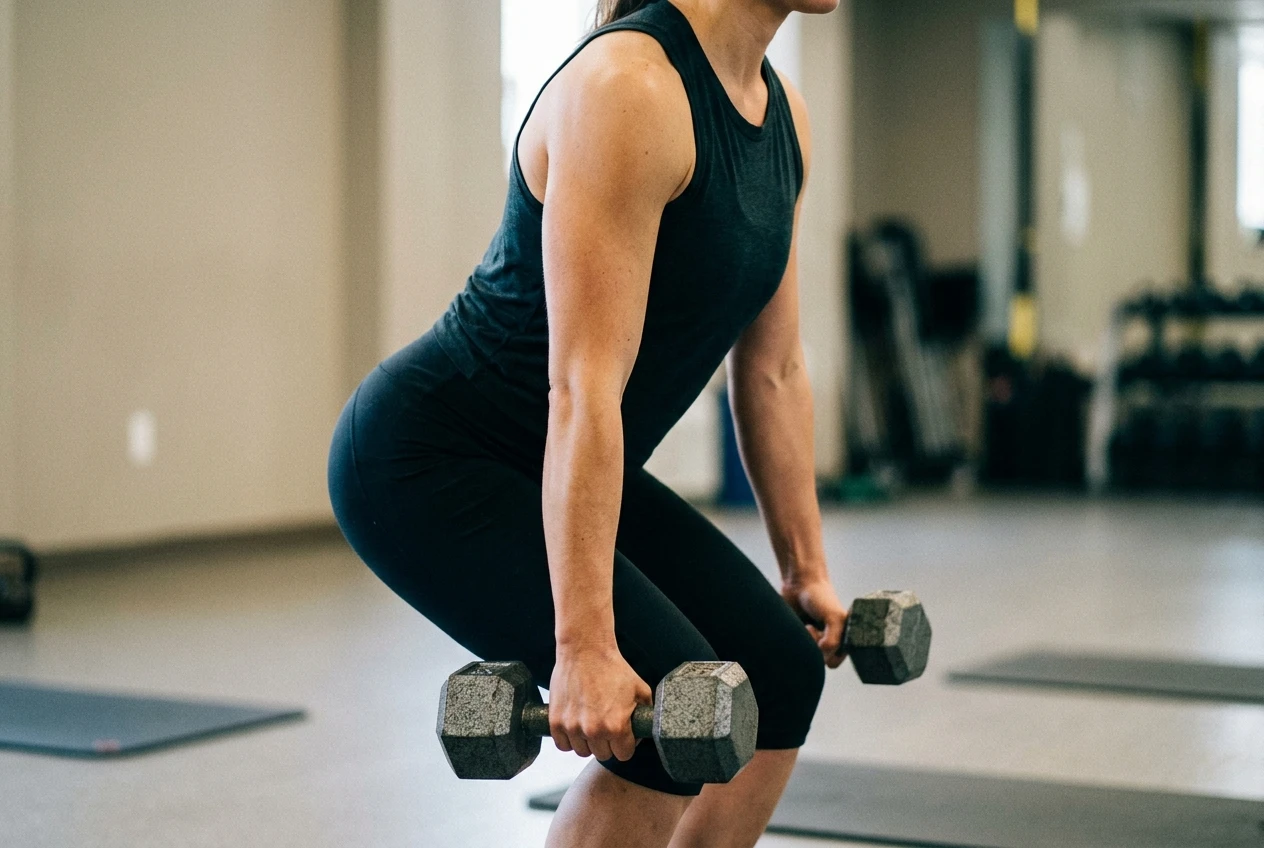
Loading bone safely matters as much as loading it at all, especially if you’re managing joint sensitivity alongside bone density concerns.
- Keep your spine neutral during hinges and squats. A rounded lower back under load is where injury risk concentrates, so brace your core gently and keep your chest lifted throughout the movement.
- Control the lowering phase. Dropping a weight quickly skips the part of the movement that builds strength and bone most effectively. Lower every rep over two to three seconds.
- Avoid locking your knees or elbows at the top of a movement. A soft bend keeps the joint, not the bone’s end-plate, absorbing the stress.
- Stop a set when your form starts to break down, not when you physically can’t lift the weight anymore. A rep done with poor form doesn’t help your bones and raises your injury risk.
If joint discomfort is a regular issue for you, it’s worth reading why low impact strength training is best after 40, which covers how to keep resistance work joint-friendly without losing the loading benefit your bones need.
Building these moves into a simple weekly routine
You don’t need an hour-long workout to see benefit here. A simple structure most women can sustain looks something like this:
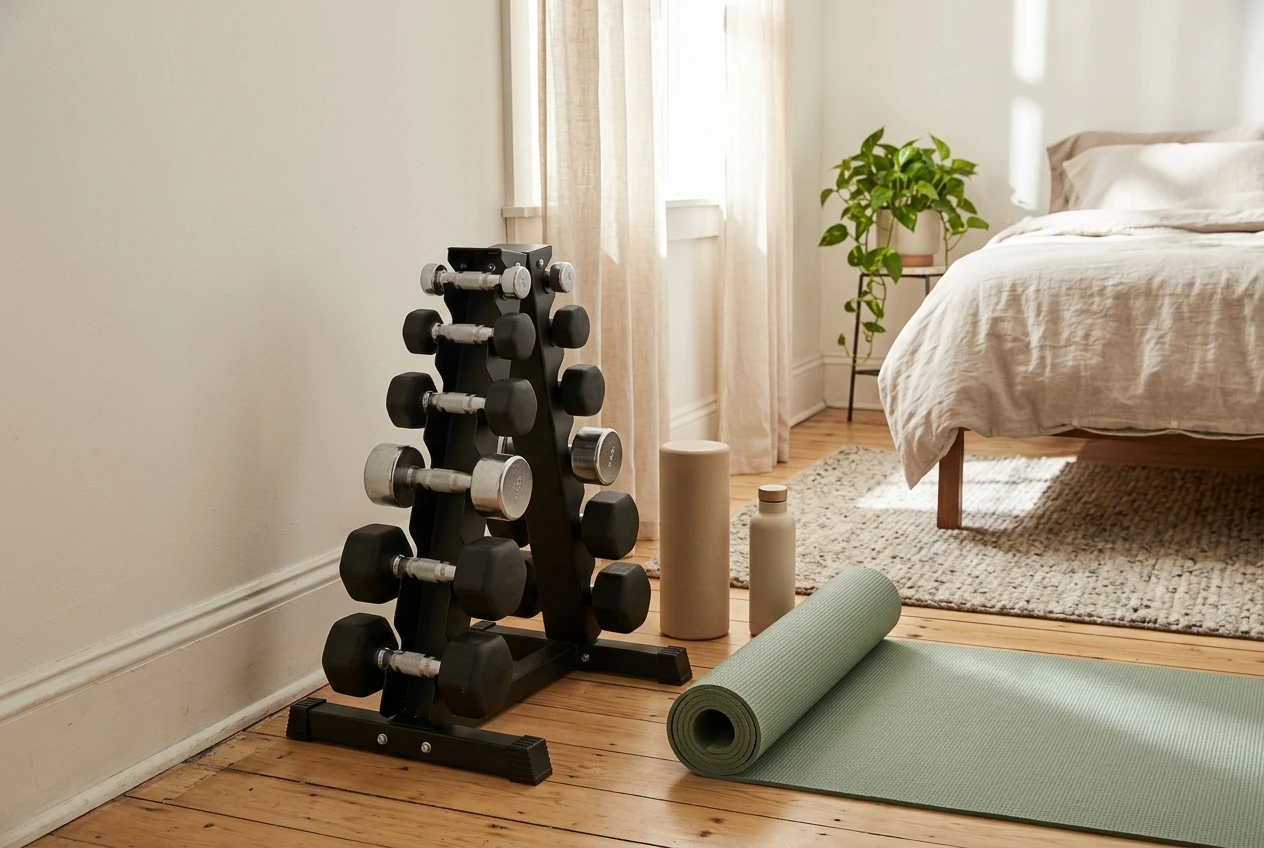
- Two to three sessions per week, non-consecutive days, giving your bones and muscles time to recover between sessions.
- One hip/spine move and one wrist/arm move per session, rotating through the exercises above so each site gets regular attention across the week.
- Two to three sets of eight to twelve reps per exercise, with a minute or two of rest between sets.
A sample week might pair goblet squats with wrist curls on Monday, Romanian deadlifts with farmer’s carries on Wednesday, and weighted step-ups with bent-over rows on Friday. Rotate the pairings however fits your schedule, as long as each bone site gets loaded at least twice a week.
Consistency matters more than intensity here. Bone remodels slowly, over months rather than weeks, so the women who see the best results are the ones who keep showing up with their dumbbells week after week, not the ones who push hardest in any single session.
If you’re still building your strength foundation, start with How To Start Strength Training After 40 before adding these bone-focused moves.