

Grocery shopping after 40 can start to feel like a research project. The protein needs change, the metabolism shifts, and suddenly you’re standing in the cereal aisle squinting at a label with fourteen lines of numbers, wondering if “low fat” is a trap and whether you need to care about net carbs. None of this means you’ve done it wrong for years. It means the usual advice piles on more rules instead of fewer, and more rules is the last thing anyone needs at the end of a long day with a cart half full.
This isn’t a crash course in nutrition science. Think of it as how to read food labels without dieting: a shortcut built on the handful of numbers that actually matter once your goal is protecting muscle and energy, not chasing a number on a scale.
Why Label Reading Suddenly Feels So Complicated After 40
Most label advice was written for one goal: weight loss, measured in calories in versus calories out. That framework made label reading feel like accounting homework, every box a potential trap, every claim something to decode or distrust.
But once the priority shifts toward keeping muscle and energy steady through your 40s and beyond, most of that homework becomes irrelevant. You don’t need to track every gram of everything. You need to know if a food is actually going to support the muscle you’re working to build, and that comes down to just a few numbers, not the whole label.
The Only Three Numbers Worth Checking First
Skip straight to these three and let everything else wait:
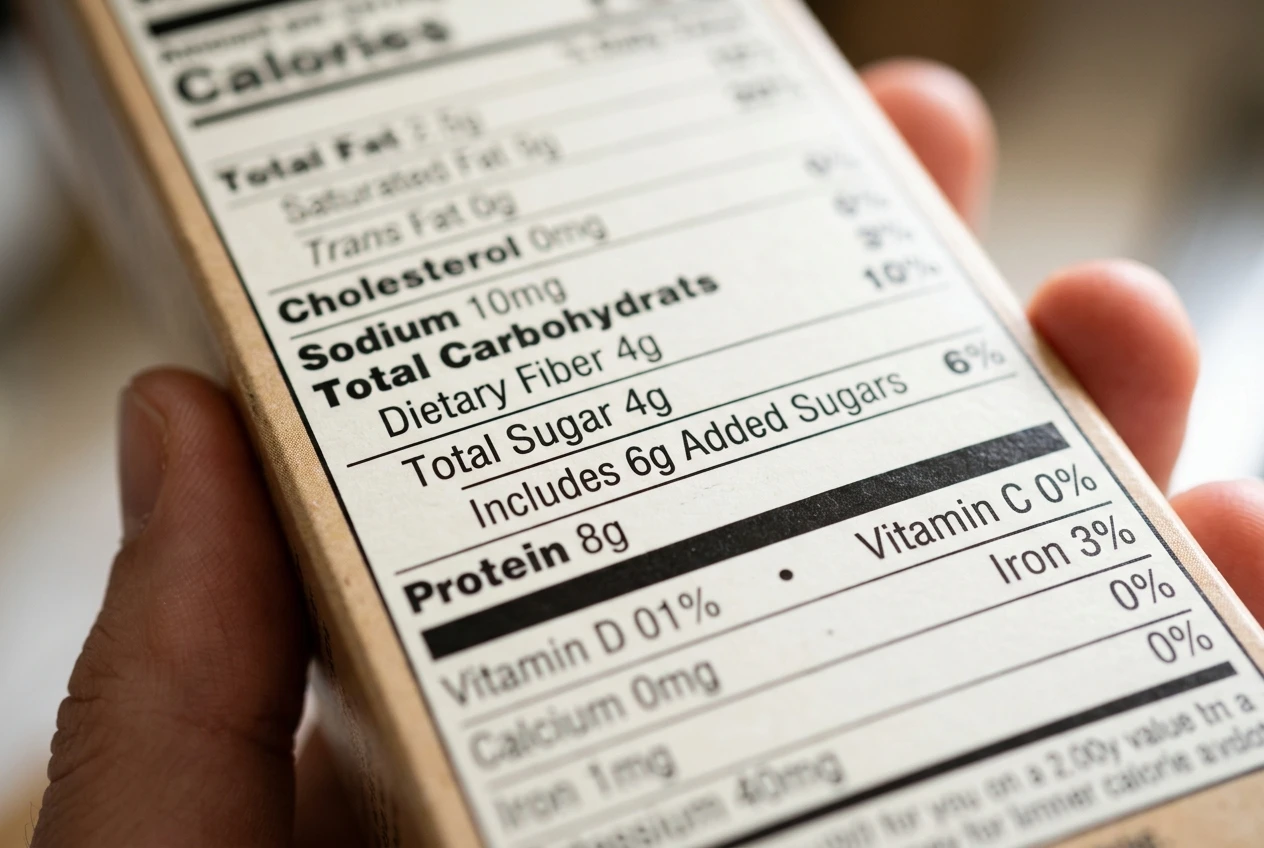
- Protein per serving. This is the number that matters most if you’re lifting weights and want your body to actually use that effort. A food with 15 to 20 grams of protein per serving is doing real work for you. A food with 2 or 3 grams, no matter what else it claims, isn’t.
- Added sugar. Not total sugar, which includes the natural sugar in things like fruit or plain yogurt. Added sugar is the number that tells you how much extra sweetener got dumped in during processing, and it’s the one worth keeping low.
- Fiber. Fiber slows digestion, helps you feel full, and supports the gut health that becomes more relevant with age. A food with 3 or more grams of fiber per serving is pulling its weight.
Everything else on the label, the sodium, the saturated fat, the vitamin percentages, can matter in specific situations, but for a woman building a simple, sustainable approach to eating, these three numbers do almost all of the useful work.
Front of Package Claims That Mean Almost Nothing
The front of a box is marketing, not information. Words like “natural,” “light,” “low fat,” and “multigrain” are not regulated the way you’d hope, and they’re placed there specifically to catch your eye before you flip the box over and see the real numbers.
“Low fat” often means sugar was added to make up for the flavor lost when fat was removed. “Natural” has almost no legal definition and tells you nothing about what’s actually inside. “Multigrain” just means more than one grain was used, it says nothing about whether any of them are whole grains.
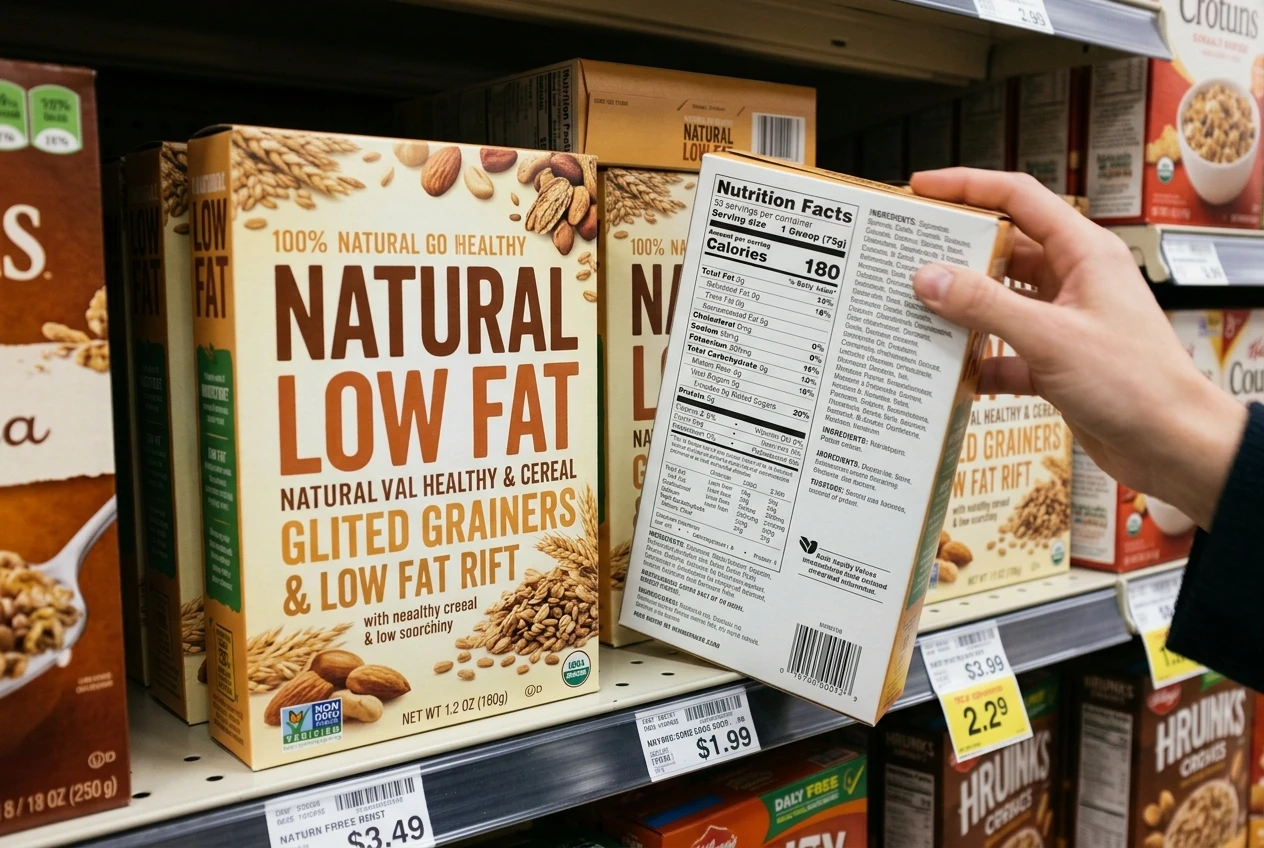
The fastest way to protect your time and your decision-making energy is to treat every front-of-package claim as irrelevant until the back of the label proves otherwise. Flip first, read the claim second, if at all.
The Serving Size Trick That Throws Off Your Math
This is the one that quietly undoes people who are doing everything else right. A label might show 7 grams of protein and 4 grams of added sugar, and those numbers look reasonable, until you notice the serving size is half a cup and the bag is meant to serve four, even though most people eat straight out of it in one sitting.
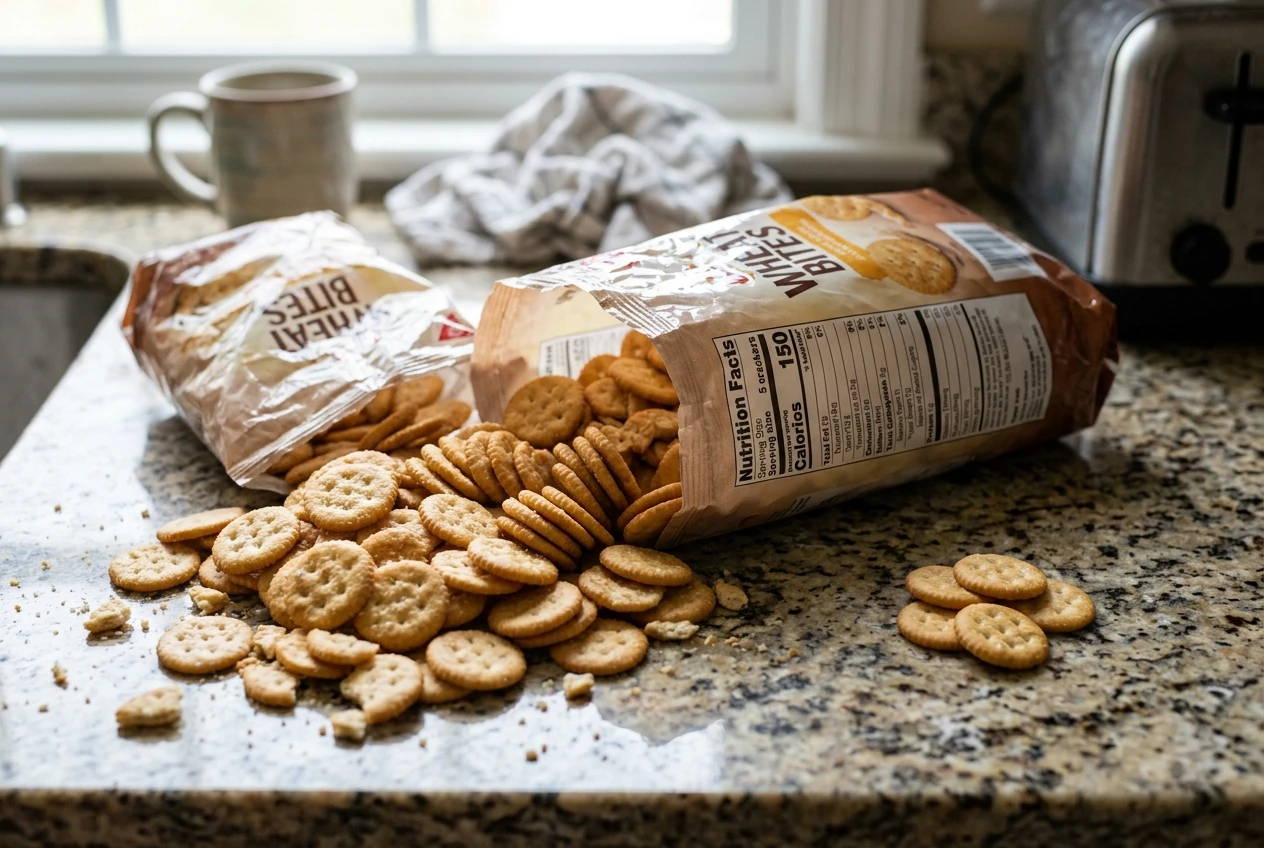
Always check the serving size before you read anything else on the label. If a bag of crackers lists a serving size of 6 crackers but you know you’ll eat 18, triple every number on that label in your head before deciding whether it’s worth it. This single habit, checking the serving size first, prevents more confusion than any other label-reading tip.
What to Look for If You’re Building Muscle, Not Just Losing Weight
If your focus has shifted from shrinking your body to building and protecting muscle, your label priorities shift too. Protein becomes the number you check first, every time, on every package.
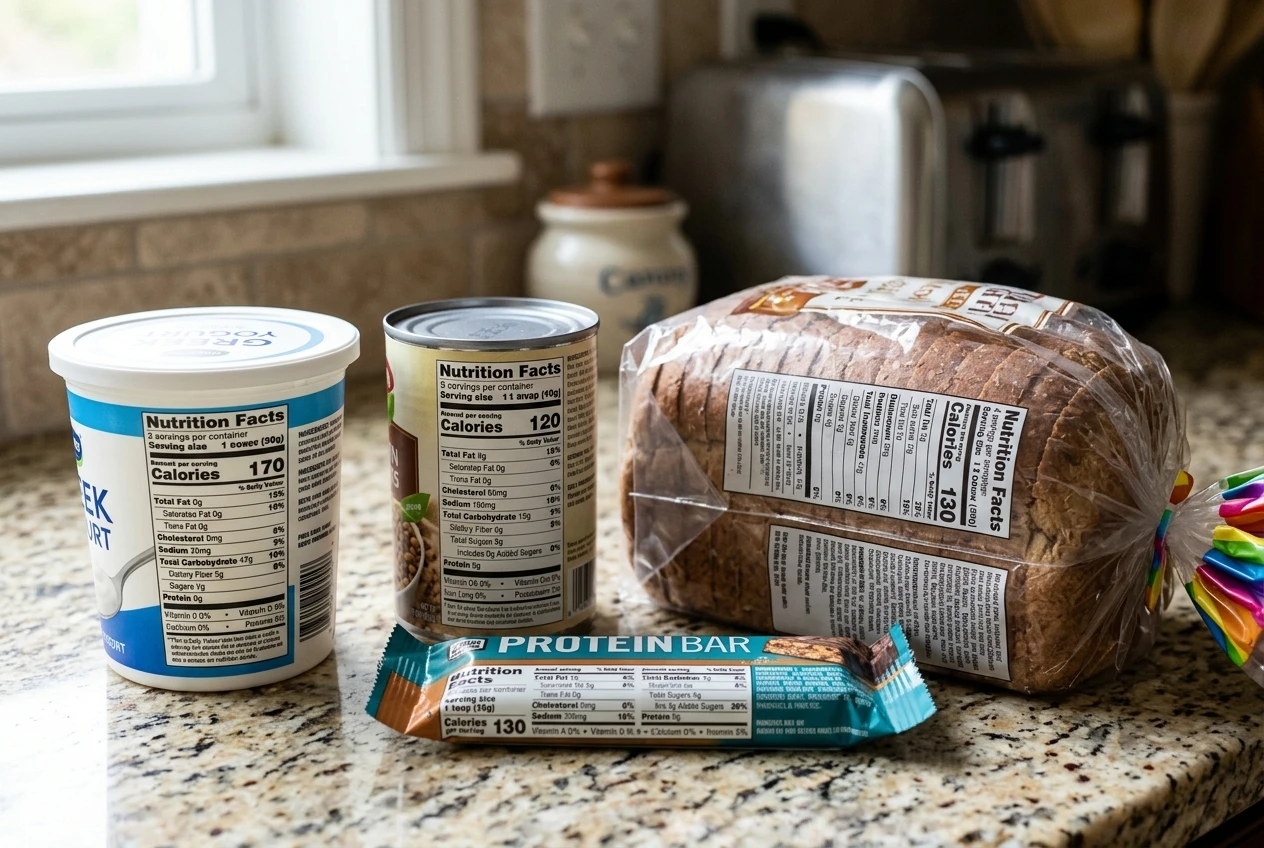
A few practical benchmarks:
- Greek yogurt or cottage cheese: look for 12 grams of protein or more per serving, which many brands hit easily.
- Protein bars and shakes: look for at least 15 grams of protein with added sugar in the single digits, since many bars quietly pack in as much sugar as a candy bar while branding themselves as healthy.
- Canned beans, lentils, and legumes: check both protein and fiber, since these foods often deliver strong numbers on both.
- Bread and crackers: protein here is usually low no matter what, so don’t expect this category to carry your protein intake. Judge it on fiber instead.
The article on why muscle mass matters after 40 covers why protecting muscle matters so much for strength, bone density, and long-term independence. Label reading is simply the grocery-store half of that same goal: making sure the food coming into your kitchen actually supports the muscle you’re working to build in your workouts.
Sugar, Fiber and the Ingredient List Shortcut
If you have thirty extra seconds, the ingredient list is worth a glance, not a deep read. Ingredients are listed by weight, from most to least. If sugar, in any of its many names, shows up in the first three ingredients, that product is built around sugar, regardless of what the front of the box says.
You don’t need to memorize the twenty different names for sugar. A simpler rule works almost as well: if the ingredient list is long and most of the words are unfamiliar, the added sugar and fiber numbers will usually tell you what you need to know anyway. The ingredient list is a backup check, not a requirement.
A Ten Second Label Check You Can Actually Stick To
Here’s the whole process, start to finish:
- Check the serving size first, and adjust the rest of the numbers in your head if you’ll eat more than that.
- Find the protein number. Is it doing real work for you, or close to zero?
- Find the added sugar number. Is it low, or is this basically dessert in disguise?
- Glance at fiber. Three grams or more is a good sign.
That’s it. No app, no calculator, no fourteen-point checklist. Once this becomes automatic, you’ll find yourself doing it while barely slowing down your cart.
The goal was never to make grocery shopping feel like a test. It was to give you a quick, reliable way to tell whether a food is actually supporting the muscle and energy you’re working for, without drowning in rules that were never designed with your goals in mind.
If you want a simple way to keep this new habit going without turning it into another thing to feel guilty about, The Simple Fitness Habit Tracker That Keeps You Honest (Without the Guilt) is built for exactly that kind of low-pressure consistency. And if you haven’t yet read why protein and muscle matter so much after 40 in the first place, that piece lays the groundwork this one builds on.