If kneeling poses have started to feel like a small ordeal instead of a resting point in your practice, the mat underneath you is worth a hard look. A lot of standard yoga mats simply were not built with knees like yours in mind, and once you know which specs actually matter, shopping for a better one gets a lot less confusing.
Why your knees hurt on a regular yoga mat (it’s not just you)
Most standard yoga mats are made to be thin and grippy, around an eighth of an inch thick, because that thinness helps with balance poses and makes the mat easy to roll up and carry. That same thinness is exactly what causes trouble for kneeling poses. There is barely any material between your kneecap and the floor, so all of your body weight presses straight down onto a small, bony joint.
This gets worse with age for a simple reason: the fat pad that naturally cushions the knee thins out over time, and joint tissue generally gets less forgiving. A mat that felt fine in your twenties can feel noticeably harder on your knees now. It is not that you have gotten more sensitive or soft. It is that the padding your body used to provide on its own is doing less work, so the mat has to pick up the slack.
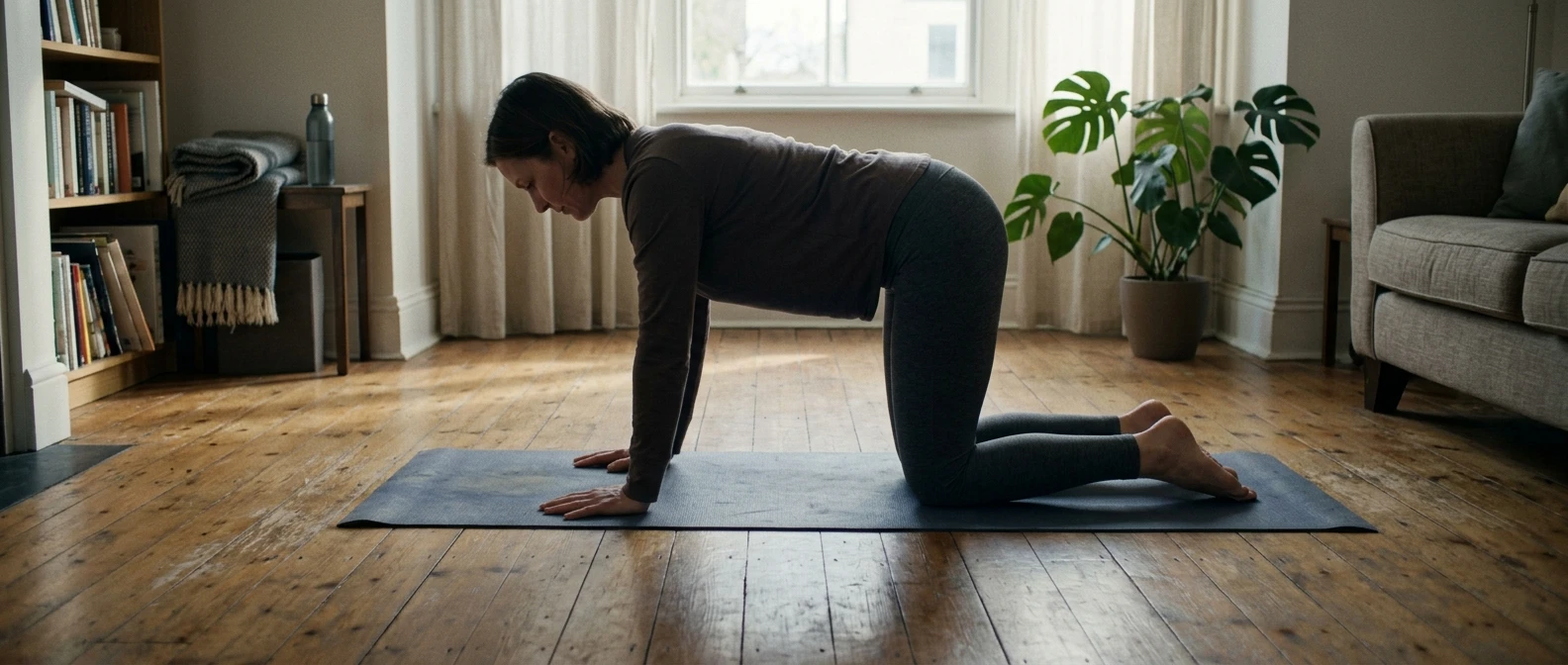
Floor surface matters too. A thin mat over hardwood or tile transmits nearly all of the hardness straight through. The same mat over carpet feels completely different. If your knees ache during cat-cow, tabletop, or low lunges, the mat is very likely part of the problem, not just the pose. One mat that comes up often for this exact issue is the TRESKO fitness and yoga mat. It is available in 1 cm or 1.5 cm thickness and two sizes (185 x 60 cm or 190 x 100 cm), made from phthalate-tested NBR foam with a ribbed and a smooth side, so you can pick the texture that feels best under a sore knee. The extra thickness options make it easy to size up specifically for kneeling work without switching mats entirely.
The three specs that actually protect sensitive knees: thickness, density and material
When you are comparing mats, three specs tell you almost everything you need to know.
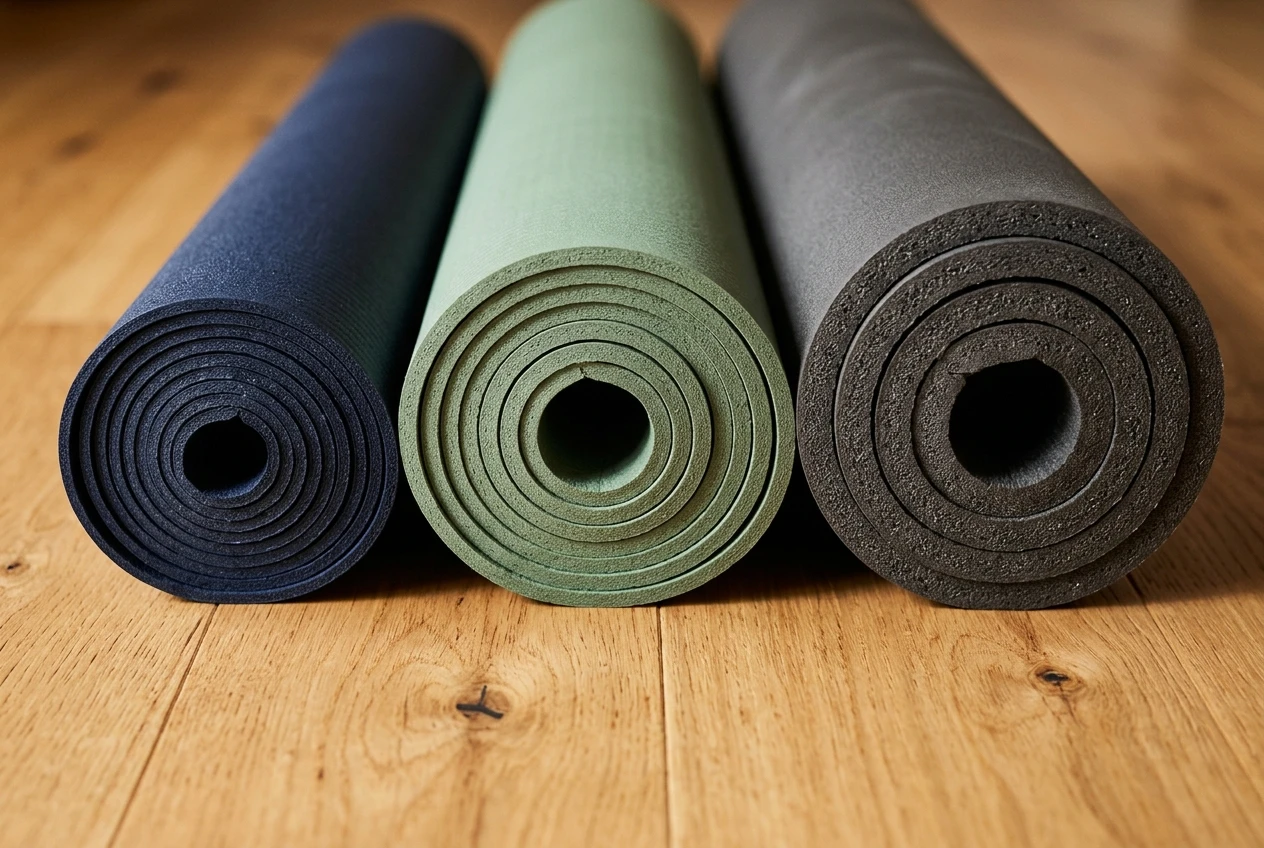
Thickness. This is the most obvious one. Standard mats run about 1/8 inch (3mm). Mats designed with joint comfort in mind usually start around 1/4 inch (6mm) and go up to 1/2 inch (12mm) or more. More thickness generally means more cushioning under the knee, but it is not the only factor.
Density. This is the one people overlook, and it matters as much as thickness does. Density is how compressed or firm the foam is. A thick mat made from low-density foam can still bottom out under a kneecap, meaning your knee presses all the way through the padding to the hard floor underneath anyway. A thinner mat made from higher-density foam can sometimes protect your knee better than a thick, soft one because it resists compressing flat under pressure.
Material. The common options are PVC, TPE, natural rubber, and foam blends. PVC tends to be denser and more durable but less eco-friendly. TPE is lighter and often more cushioned but can wear down faster. Natural rubber has excellent grip and decent cushioning but can be heavier and pricier. None of these is automatically “the knee-friendly one,” which is why thickness and density matter more than the material name on the label.
Standard mats versus knee friendly mats: what’s really different
A standard mat is built around portability and grip for standing and balance poses. A mat marketed for joint comfort is built around pressure distribution. The difference shows up most clearly in kneeling poses, where your body weight concentrates on a small, bony area instead of spreading across a foot or a palm.
Knee-friendly mats typically combine moderate-to-high thickness with a denser foam core, sometimes with a softer top layer for grip and a firmer bottom layer for support. This layered construction is why two mats can both be labeled “6mm” and feel completely different under your knee. One has a single foam layer that compresses evenly. The other has a denser base that stops you from pressing all the way through.
The tradeoff with thicker, denser mats is stability. A very thick, soft mat can make standing balance poses feel wobbly, because your foot sinks in rather than staying planted. This is why some people keep two mats: a standard thin one for standing-focused practice and a thicker one for floor and kneeling work.
Extra cushioning options: knee pads, folded mats and layering tricks
You do not have to replace your mat to get more knee comfort right away.
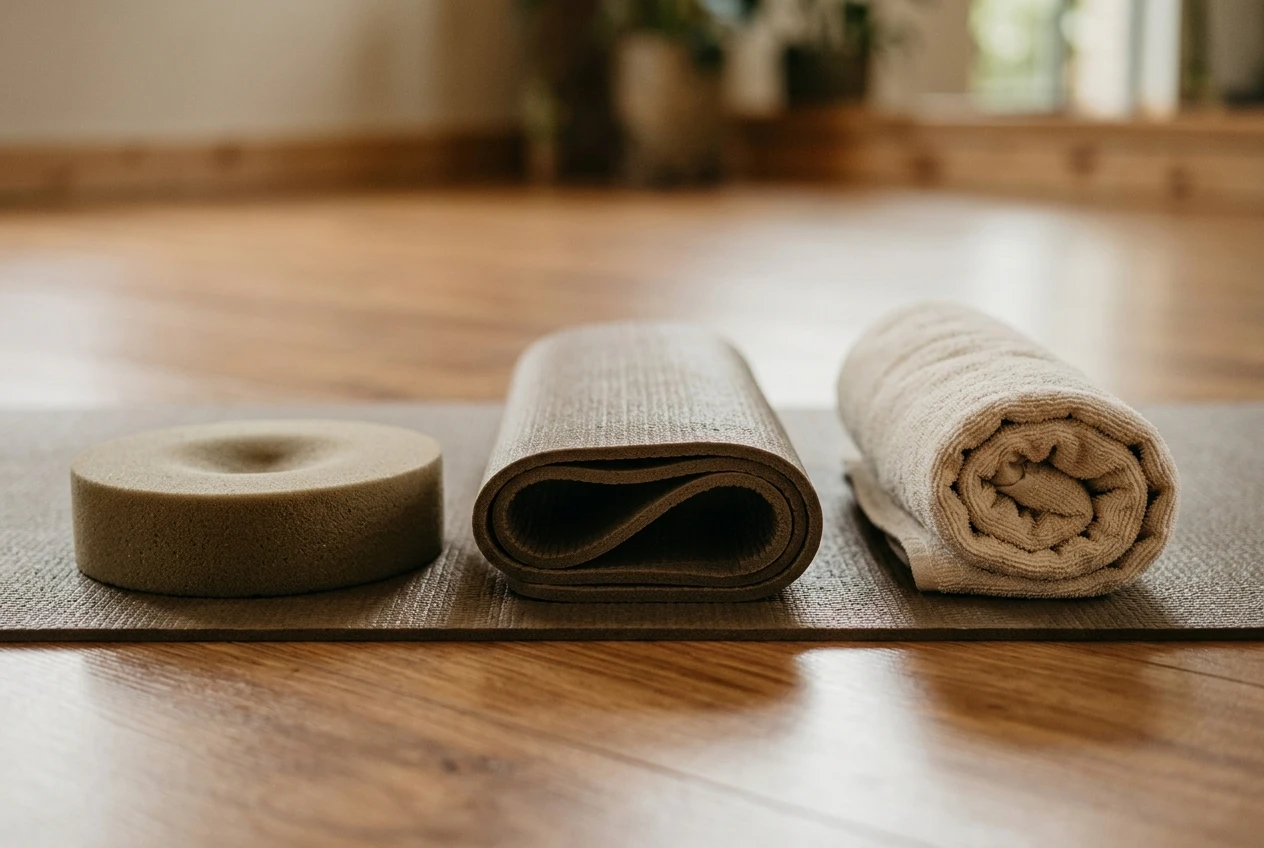
- Knee pads are small, portable foam cushions made specifically to slide under one or both knees during kneeling poses. They are inexpensive and easy to toss in a bag, which makes them a reasonable first thing to try before buying a new mat.
- Folding your existing mat so the kneeling area has a double layer is a free option. It works, but it shifts the mat and can be awkward mid-flow since you have to reposition it as you move between poses.
- Layering a towel or small folded blanket under the knees adds cushioning without changing the whole mat. This is a common fix for days when your knees are more sensitive than usual, even if you already own a thicker mat.
These are good stopgaps or supplements, but if kneeling discomfort is a regular problem rather than an occasional one, a mat built with the right thickness and density from the start will serve you better long term than constantly adjusting around a mat that was never designed for it.
Who needs extra thickness and who doesn’t (it depends on your floor and your practice)
If you practice on hardwood or tile and spend real time in kneeling poses, sizing up to a 1.5 cm mat like the TRESKO mat mentioned earlier is worth it. If you’re on carpet or mostly do standing work, a thinner mat is still fine.
Not everyone needs the thickest mat on the shelf, and going too thick can cause its own problems.
You likely benefit from a thicker, denser mat if you practice on hardwood, tile, or concrete, if your routine involves a lot of kneeling, tabletop, or low lunge work, or if you have noticed knee discomfort that gets worse specifically during floor-based poses.
You may do fine with a moderate thickness, or even a standard mat with a knee pad for backup, if you practice on carpet, if your sessions lean more toward standing and balance work, or if your knee discomfort is mild and occasional rather than consistent.
If your practice includes a lot of balance poses, a very thick mat can make those poses harder by letting your foot sink unevenly. In that case, a mid-range thickness around 6mm with a denser foam, paired with a knee pad for the kneeling portions, is often a better match than going straight to the thickest option available.
How to test a mat for knee comfort before you commit
Specs on a product page only tell you so much. Before you commit to a mat, a few simple checks can tell you more than the description will.
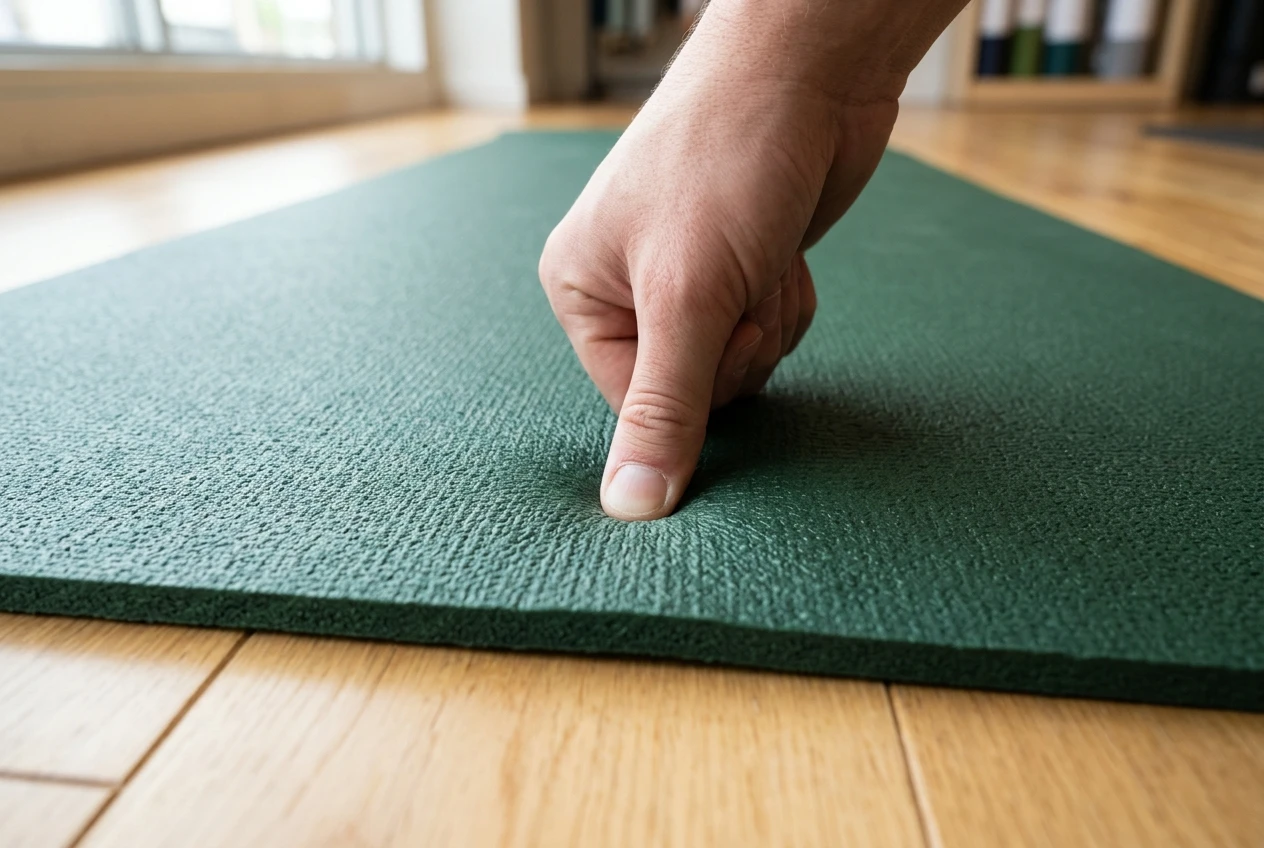
- Press your thumb into the mat on the showroom floor or against a sample if one is available. If your thumb sinks all the way through to feel the hard surface underneath, the foam is too low-density, regardless of how thick the mat is listed.
- Kneel on it for a full minute rather than a few seconds. Knee discomfort from a thin or poorly cushioned mat often takes a moment to show up, so a quick tap with your knee will not reveal it.
- Check the return policy before buying online. Because cushioning only really reveals itself once you use the mat for a real session, a retailer that allows returns after a trial use is worth prioritizing over one that does not.
- Note the floor you tested it on. A mat that feels great on a showroom’s carpeted floor may feel different on your hardwood at home, so account for that difference when judging the feel.
Caring for a thicker mat so it lasts
Thicker, denser mats are an investment, and a bit of care keeps them performing the way they did on day one.
Wipe your mat down after each use with a mat-specific cleaner or a mild soap and water solution, since sweat and oils break down foam over time and can cause the surface to feel slick or get grippy in the wrong way. Let it air dry fully before rolling it up, because trapping moisture inside a thick mat can lead to a musty smell that is hard to get rid of later. Store it flat or loosely rolled rather than folded, since sharp creases in a denser foam can create permanent lines that turn into pressure points, which somewhat defeats the purpose of buying a cushioned mat in the first place. Rotate which end you use for kneeling occasionally too, so the padding compresses evenly instead of breaking down faster in one spot.
If you’re also dealing with joint discomfort beyond the mat, the home workout gear guide walks through the rest of your setup.
“As an Amazon Associate, I earn from qualifying purchases.”